




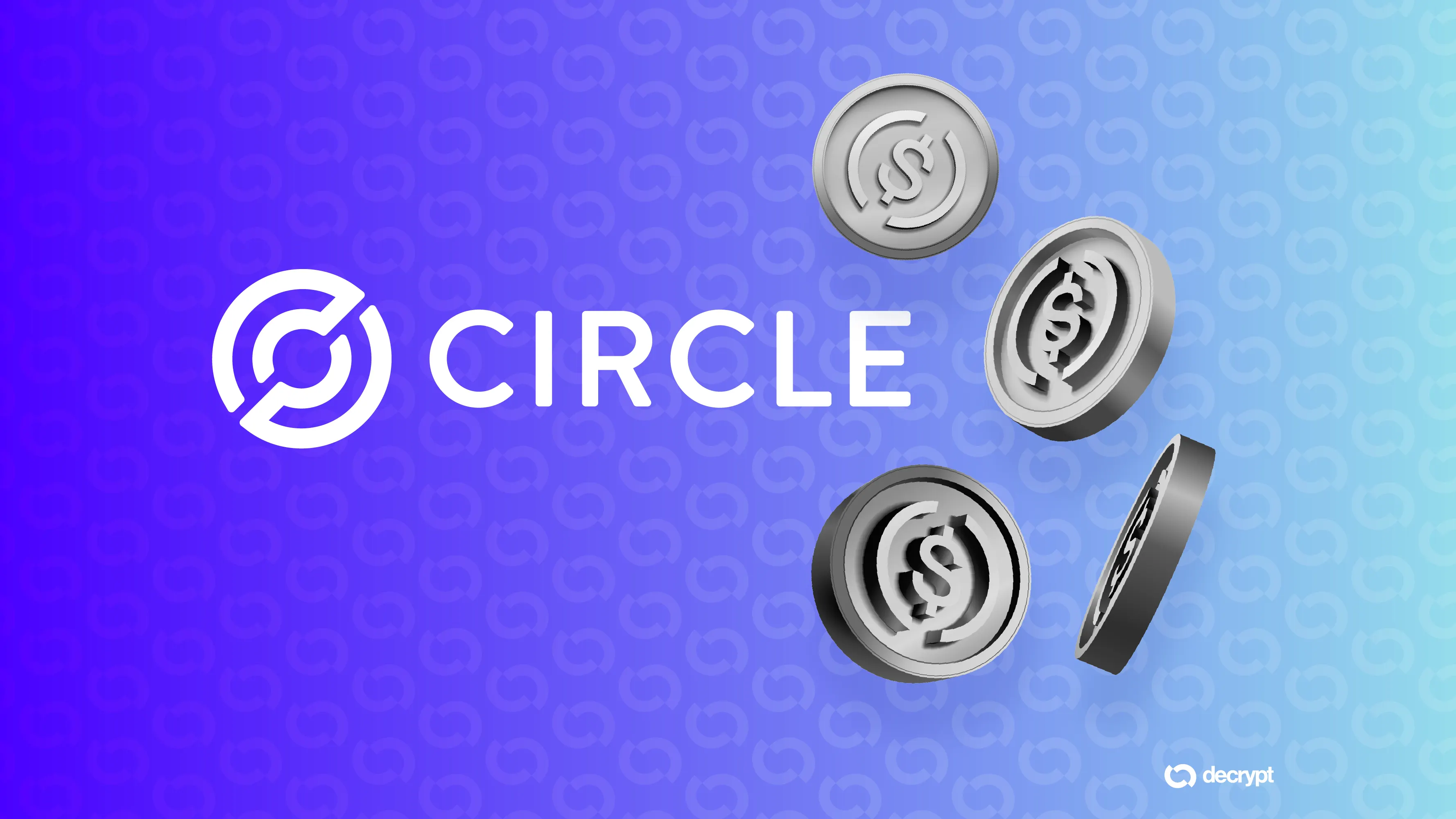
Circle Internet Group has secured a key license from Abu Dhabi’s financial regulator and hired a regional veteran to run its Middle East and North Africa operations, marking the company’s most direct push yet into a market positioning itself as a hub for regulated digital finance.
Issued by Abu Dhabi Global Market—the international financial center and free economic zone of Abu Dhabi—the license authorizes Circle to operate as a regulated Money Services Provider under the capital’s financial services oversight.
Joining Circle’s efforts in the UAE and MENA is Dr. Saeeda Jaffar from Visa, where she served as senior vice president and group country manager for the Gulf Cooperation Council.
A long-time regional payments exec, she previously held roles at McKinsey, Bain, and Alvarez & Marsal, and has advised banks, sovereign funds, and government institutions across the Middle East, Africa, Europe, and the U.S.
Known for issuing stablecoin products such as USD Coin (USDC), Circle has spent the past year deepening its presence in the Gulf as regulators in Abu Dhabi and Dubai laid out clearer pathways for fiat-referenced tokens and payment infrastructure.
“Regulatory clarity is the foundation of a more open and efficient internet financial system,” Jeremy Allaire, co-founder, chairman, and CEO of Circle, said in a statement.
The framework laid out by the Financial Services Regulatory Authority of ADGM “sets a high bar for transparency, risk management, and consumer protection—standards that enable trusted stablecoins to power real-world payments and finance at internet scale,” Allaire added.
Crypto exchange Binance, which secured full ADGM approval earlier this week, is the only other major global crypto firm to hold comparable permissions under the FSRA’s regime.
The developments come as regulators in the broader region move to formalize reporting standards and tighten oversight of digital asset activity.
Earlier in September, the UAE signed a new crypto tax-reporting agreement and opened an industry consultation for how digital asset activity should be reported to authorities.
That agreement seeks to develop “clear and effective regulatory rules informed by the insights of experts and stakeholders,” aligned with market needs, Decrypt previously reported.
Circle’s move could be seen as “further proof” that the UAE “has built the world’s most mature and forward-leaning regulatory framework for stablecoins,” Charles d’Haussy, CEO at dYdX Foundation, told Decrypt.
“While many jurisdictions are still debating whether to allow yield-bearing stablecoins, Abu Dhabi has already said yes—and global leaders like Circle are voting with their feet,” he added.
Asked about how the UAE could become a hub for digital assets, d’Haussy said it “isn’t trying to be ‘crypto-friendly’—it’s systematically positioning itself as the global capital for regulated digital assets and stablecoins.”
The UAE has had clear rules dating back to 2017, explicit approval for yield-bearing tokens, and “a $30 billion annual inflow of on-chain volume,” d’Haussy said, citing data from Arabian Crypto, a book he co-authored.
He added that the country’s expat-driven remittance flows, its position as a trade hub, and policies encouraging banks to custody stablecoin reserves have helped create a market where both retail and institutional users can legally earn yield on regulated stablecoins.
“Add 24/7 blockchain rails, zero legal uncertainty, and active government support for private-sector issuance, and you have the most attractive combination of market demand, regulatory clarity, and infrastructure anywhere outside the U.S,” d’Haussy noted.
